
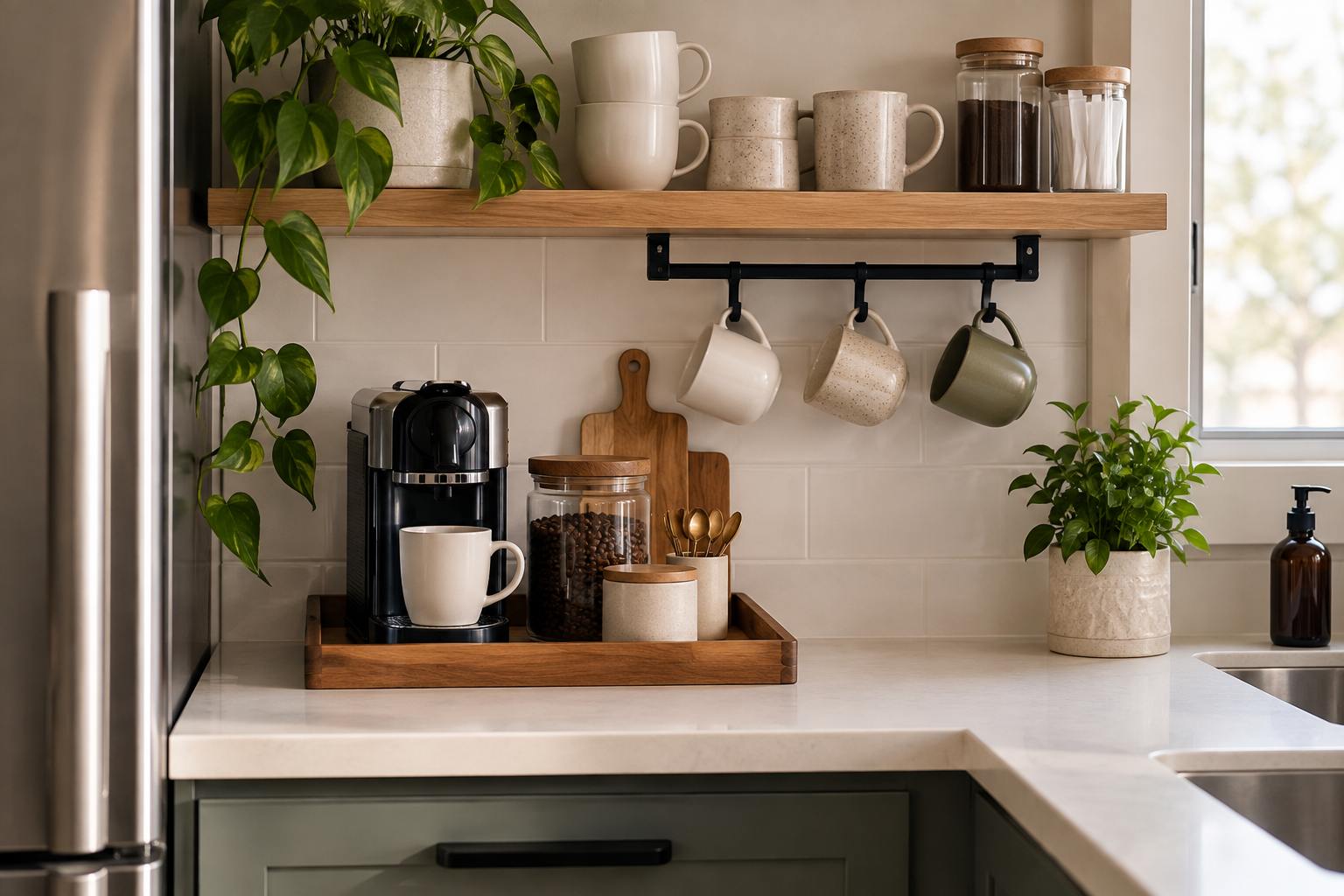
Small Coffee Station Setup: A Simple Checklist for Tiny Kitchens
A coffee station sounds like something that belongs in a bigger kitchen—more counter space, more cabinets, more room to spread out. In practice, a small coffee station often works better than a large one. With less space to fill, you're forced to keep only what you actually use, which usually means a setup that's easier to maintain and nicer to look at.
The challenge in a small kitchen isn't finding room for coffee gear. It's deciding what deserves counter space and organizing the rest so it doesn't pile up. This guide walks through that process step by step, from picking a spot to building a checklist you can use every time your setup starts to feel cluttered again.
What Makes a Small Coffee Station Work
A functional coffee station in a small kitchen comes down to three things: a defined spot, a short list of items that stay out, and a system for everything else.
A cluttered coffee corner often isn't just about having too much stuff—it's about too many items competing for the same limited counter space.
Before adding anything to your setup, it helps to separate what you use daily from what you use occasionally. Daily items earn counter space. Everything else goes into storage nearby, close enough to reach without digging, but out of the way when it's not in use.
Step 1: Choose the Right Spot
Start by looking at your kitchen with fresh eyes, rather than defaulting to wherever the coffee maker has always sat. A good spot for a small coffee station has three things going for it: it's near an outlet, it's close to water if your setup needs it, and it doesn't interfere with your main prep area.
Corners work well because they're often underused for cooking. The end of a counter run, a narrow section next to the fridge, or even the top of a cart or small cabinet can all work, provided there's room to plug in a coffee maker or kettle without stretching a cord across the kitchen.
If your kitchen genuinely has no extra counter space, consider a narrow cart or shelf just outside the kitchen, in a dining area or hallway nook. It still counts as a coffee station, and it takes the pressure off your kitchen entirely.
Step 2: Measure Before You Commit
It's easy to picture a coffee station that looks good in photos and then realize it doesn't fit. Before buying or rearranging anything, measure the actual space you're working with, including the height above the counter if you're placing anything underneath a cabinet.
Write down the width, depth, and height available. This keeps you from choosing a coffee maker, tray, or organizer that's slightly too big, which is one of the most common reasons small coffee stations end up feeling cramped instead of organized.
Also make sure your coffee machine has enough clearance for normal use, including refilling the water tank, opening lids, and allowing heat and steam to dissipate safely.
Step 3: Decide What Actually Belongs on the Counter
This is the step that determines whether a small coffee station stays organized or slowly turns into clutter. Not everything related to coffee needs to live on the counter, and being selective here matters more than any organizer you add later.
Keep Within Reach
A few items typically justify permanent counter space:
The coffee maker or espresso machine itself
A small canister for daily-use coffee or grounds
A mug or two, if you use the same ones regularly
A spoon or scoop, ideally in a small holder rather than loose
Store Nearby Instead
Everything else can move into a cabinet, drawer, or shelf close to the coffee station:
Backup bags of coffee or extra pods
Less frequently used mugs
Filters, syrups, or specialty add-ins
Cleaning supplies for the coffee maker
The goal isn't to hide every trace of coffee gear. It's to make sure only the things you touch daily are competing for counter space, while the rest stays organized but out of sight.
Step 4: Add Vertical and Under-Cabinet Storage
Once you've decided what stays on the counter, vertical space becomes your best tool for keeping a small coffee station from spreading out.
A small shelf mounted above the counter can hold mugs or a canister without using any counter space at all. Hooks under a cabinet can also work well for hanging lightweight items and keeping frequently used essentials within reach.
If you're renting or prefer not to drill into walls, consider removable storage solutions or a small standing shelf that sits on the counter and adds a second tier without needing to be mounted.
The goal isn't to fill every inch of vertical space. Add storage only when it actually removes something from the counter or makes your daily routine easier.
Step 5: Organize Coffee Accessories by Use
Coffee stations tend to accumulate small items quickly—stirrers, sweeteners, extra filters, reusable pods. Left loose, these are usually what make a small setup look disorganized, even when the bigger items are in order.
Group accessories by how often you use them, then contain each group separately. A small tray or shallow bin for daily items keeps them together without letting them spread across the counter.
A labeled container in a nearby cabinet works well for backups and occasional-use items, so you're not searching through a drawer every time you need a filter.
This kind of coffee organization doesn't need to be elaborate. The goal is simply that everything has a defined spot, so putting things away is as easy as taking them out.
Step 6: Keep It Easy to Clean
A small coffee station gets used daily, which means spills, grounds, and water rings are part of the routine.
A suitable tray or mat underneath your setup can help protect the counter and make wiping down the station easier. A tray can also visually define the coffee zone, which is especially useful in a small kitchen where every surface is more visible.
Build a quick wipe-down into your routine, even if it's just once a day. A coffee station that's easy to clean is much more likely to stay organized than one that requires a major reset every time it starts to look messy.
Common Coffee Station Mistakes in Small Kitchens
A few patterns show up often in small coffee station setups and are worth avoiding from the start:
Keeping too many mugs on display rather than a couple in regular use
Skipping measurements and ending up with an organizer or tray that's too large
Letting loose accessories like filters or stirrers sit directly on the counter
Choosing a spot that overlaps with primary meal-prep space
Adding storage before deciding what actually needs to be stored
Most of these come down to the same issue: adding items or organizers before deciding what the space actually needs.
Working through the checklist below in order helps avoid that.
The Complete Small Coffee Station Checklist
Use this list when setting up a new coffee station or reorganizing an existing one:
Choose a spot near an outlet that doesn't overlap with your main prep space.
Measure the width, depth, and height available.
Check appliance clearance for refilling, opening lids, heat, and steam.
List what you use daily versus occasionally.
Keep only daily items on the counter.
Move backups and extras to a nearby cabinet or drawer.
Use vertical space where it genuinely frees up counter space.
Group small accessories and give each group a defined home.
Add a suitable tray or mat if it makes cleanup and organization easier.
Build a quick wipe-down into your daily routine.
Revisit the setup every few months and remove anything you no longer use.
A small coffee station doesn't need a lot of space to work well. It needs a defined spot, a short list of what belongs on the counter, and a simple system for everything else.
Once those pieces are in place, you can enjoy your coffee without letting the setup take over the kitchen.