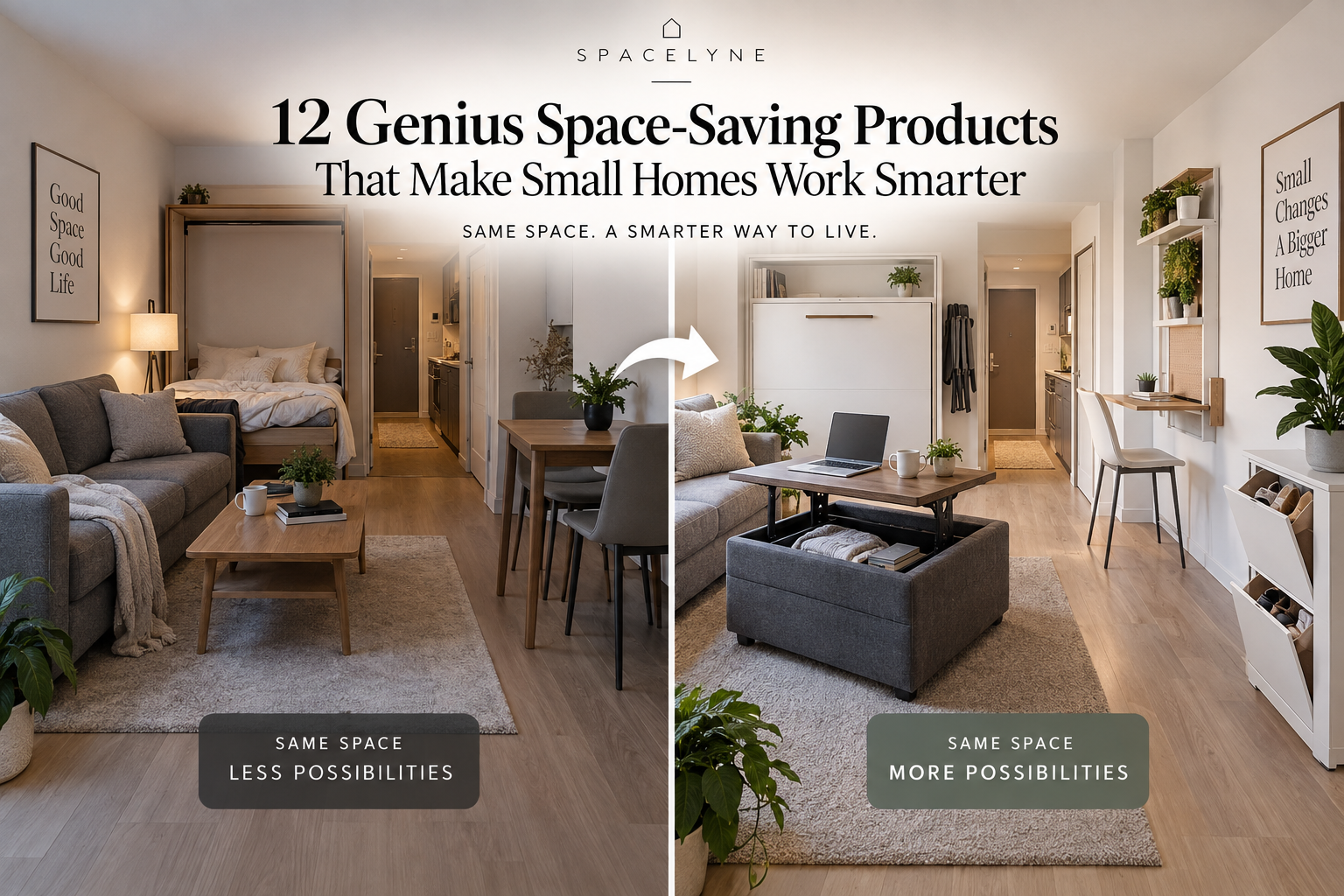

A small home doesn't need more square footage to feel more spacious—it needs storage that's actually working for it. Clutter builds up in predictable places: entryways, closets, corners of the living room, spaces under furniture that go unused. Once those areas are organized with intention, even a compact apartment or studio can feel noticeably more functional.
Below are 21 organization ideas covering the areas of a home where small-space clutter tends to build up most: the entryway, living room, bedroom, vertical wall space, and flexible furniture choices. Several ideas are renter-friendly, since many small-space dwellers can't make permanent changes to their space.
Organize the Entryway First
The entryway sets the tone for the rest of the home, and it's often the first place clutter accumulates.
1. Add a Slim Console Table with Storage
A narrow console table just inside the door gives you a spot to drop keys and mail while offering drawer or shelf space underneath for shoes, bags, or seasonal items.
2. Use Wall Hooks Instead of a Coat Rack
A row of wall-mounted hooks takes up far less floor space than a standing coat rack and keeps jackets, bags, and umbrellas off the floor entirely.
3. Add a Shoe Tray or Small Storage Bench
A shoe tray keeps footwear contained near the door, while a small bench with storage underneath adds a place to sit while also hiding shoes or accessories out of view.
Make the Living Room Work Harder
In a small living room, furniture needs to serve more than one purpose to avoid feeling cramped.
4. Choose a Coffee Table with Storage
A coffee table with drawers or a lower shelf gives you a place to store remotes, coasters, or magazines without adding a separate storage piece to the room.
5. Use Baskets for Blankets and Loose Items
Woven or fabric baskets are an easy way to corral blankets, throw pillows, or toys that would otherwise pile up on furniture or the floor.
6. Add Floating Shelves Instead of a Bulky Bookshelf
Floating shelves hold books, decor, or media equipment without the visual weight or floor footprint of a traditional bookshelf, which matters in a room where every square foot counts.
7. Use a Storage Ottoman for Extra Seating
An ottoman with a hollow interior provides extra seating and doubles as hidden storage for blankets, remotes, or anything else you'd rather not have out in the open.
Organize the Bedroom Without Adding Furniture
Bedrooms in small homes often have to store more than they were designed for, which makes smart use of existing space essential.
8. Use Under-Bed Storage Bins
The space under a bed frame is one of the most overlooked storage areas in a small home. Flat bins or rolling drawers can hold off-season clothing, extra linens, or shoes without taking up any closet space.
9. Add a Slim Nightstand with Drawers
A narrow nightstand with one or two drawers keeps small essentials contained and out of sight, rather than accumulating on top of a surface with no storage at all.
10. Use an Over-the-Door Organizer for Accessories
An over-the-door organizer works well in a bedroom for jewelry, scarves, or other small accessories, adding storage without requiring any additional furniture or floor space.
11. Maximize Closet Space with Slim Hangers and Stackable Bins
Switching to slim, uniform hangers can noticeably increase usable hanging space in a small closet. Stackable bins on the closet floor or shelf make use of vertical space that's often left empty above folded items.
Use Vertical Space Throughout the Home
Vertical space is one of the most underused resources in a small home, and it exists in nearly every room.
12. Install Floating Shelves in Unused Wall Space
Blank walls above furniture, in hallways, or beside doorways are ideal spots for floating shelves, adding storage or display space without using any floor area.
13. Use Pegboards for Flexible Storage
A pegboard mounted in a kitchen, office, or craft area offers adjustable storage that can be rearranged as your needs change, making it especially useful in multi-purpose small spaces.
14. Choose Tall, Narrow Bookshelves Over Wide Ones
A tall, narrow bookshelf holds as much as a wide one while taking up a fraction of the floor space, which matters in rooms where floor area is limited.
15. Use the Back of Doors for Hanging Storage
Nearly every door in a small home has unused space on its back. Hooks, hanging organizers, or slim racks can turn that space into storage for towels, bags, or cleaning supplies.
Choose Furniture That Does More Than One Job
In a small home, furniture that serves a single purpose is a missed opportunity.
16. Use a Sofa Bed or Daybed for Guest Space
A sofa bed or daybed allows a living room or office to double as a guest space without dedicating an entire room to occasional use.
17. Add a Storage Bench Near the Dining Table or Entry
A bench with a lift-up seat or open shelving underneath can serve as extra seating while also hiding away shoes, linens, or other items that don't need to be on display.
18. Use Nesting Tables Instead of One Large Table
Nesting tables can be tucked together to save space day-to-day, then pulled apart when extra surface area is needed, giving you flexibility without a bulky, permanent footprint.
Renter-Friendly Organization Solutions
Many small-space solutions need to work without drilling, painting, or making permanent changes to the space.
19. Use Tension Rods and Adhesive Hooks Instead of Drilling
Tension rods can create useful hanging or divided storage inside cabinets and closets, while weight-rated adhesive hooks add storage to walls and doors without drilling.
20. Use Furniture on Wheels for Flexible Layouts
Small rolling carts or furniture with locking wheels can be repositioned easily, making it simple to reconfigure a room for different needs without committing to a fixed layout.
21. Use Removable Shelf Liners to Define Storage Zones
Removable, adhesive-free shelf liners can help visually separate zones within a shared cabinet or closet, making it easier to keep items organized without any permanent markings or installation.
Small Space Organization Checklist
Use this list to identify where your home has the most opportunity for better organization:
Add a slim console table with storage near the entry
Use wall hooks instead of a freestanding coat rack
Add a shoe tray or small storage bench by the door
Choose a coffee table with built-in storage
Use baskets to contain blankets and loose items
Add floating shelves instead of a bulky bookshelf
Use a storage ottoman for hidden storage and seating
Add under-bed storage bins for off-season items
Use a slim nightstand with drawers
Add an over-the-door organizer for accessories
Maximize closet space with slim hangers and stackable bins
Install floating shelves in unused wall space
Use a pegboard for flexible, adjustable storage
Choose tall, narrow bookshelves over wide ones
Use the back of doors for hanging storage
Consider a sofa bed or daybed for guest space
Add a storage bench near the entry or dining area
Use nesting tables for flexible surface space
Use tension rods and adhesive hooks for no-drill storage
Add furniture on wheels for flexible layouts
Use removable shelf liners to define storage zones
A small home doesn't need to feel cramped once its storage is being used with intention. Start with the room that bothers you most, work through a few relevant ideas from this list, and let the rest of your space follow from there.